Four hundred dollars, twelve hundred dollars, and what the difference actually buys
A component-by-component account of what separates a cheap hybrid from an expensive one, and where the extra money stops improving the ride you actually take.
Two bikes can share a silhouette, a wheel size, a handlebar shape and a stated purpose, and still be separated by eight hundred dollars, which is enough money that a careful buyer wants an itemized account rather than a shrug about quality. The account exists, and it is unevenly distributed. Some of that gap buys parts that will change how the bike behaves in rain, on gravel, and in the fourth winter of daily use. Some of it buys grams. Knowing which is which is most of the work.
Brakes are the first real fork in the road
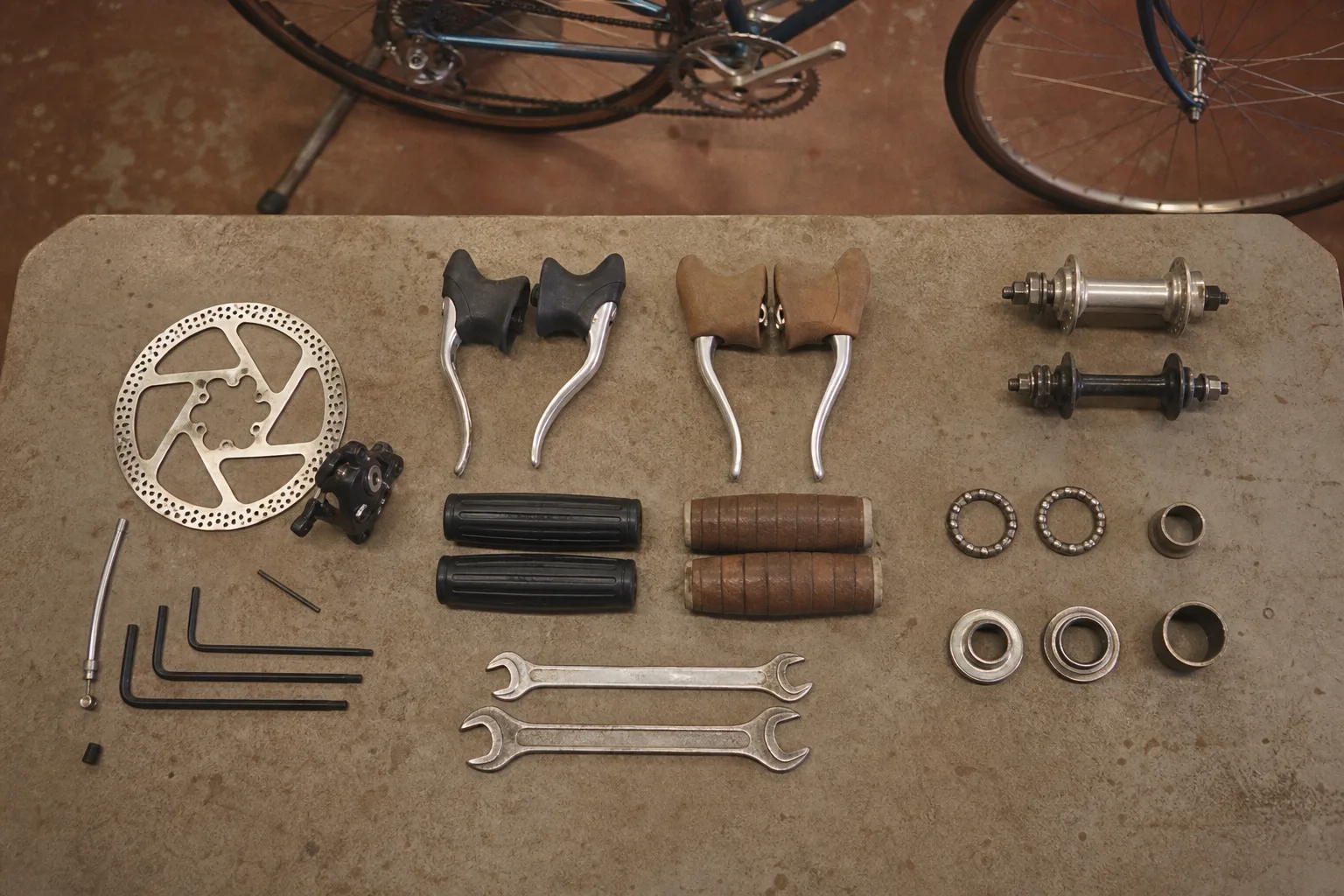
At the low end of the range, a bike either has rim brakes or mechanical disc brakes, and mechanical discs are the more common answer now on anything sold as a hybrid. A cable pulls a single pad against the rotor, the rotor flexes slightly to meet the fixed pad on the other side, and the whole system works. It also drifts out of adjustment, wears unevenly, and loses feel as the cable housing ages. Hydraulic discs, which start appearing somewhere in the middle of the range, self-adjust for pad wear and give a lighter lever pull that matters most when your hands are cold and you are carrying groceries.
The upgrade is genuine, not marketing. What a careful reader checks is whether the hydraulic system on a given bike is a full groupset brake or an entry-level unit paired with resin pads and a thin rotor, because the cheapest hydraulics are not obviously better than a well-set-up mechanical caliper with compressionless housing. The Consumer Product Safety Commission is responsible for the federal requirements that bicycles sold in the United States must meet, including braking performance, so neither system is being offered on the assumption that it barely works.
Hubs, spokes and the wheel you never think about
Wheels are where the money hides, because they are sold as a single line item and rarely described in detail. A cheap wheel has loose-ball hubs with pressed steel cups, a machine-laid spoke pattern brought to rough tension, and an eyeletless rim that starts working its way out of true within a few hundred miles. A better wheel has sealed cartridge bearings, evenly tensioned spokes, and a rim with enough material at the spoke bed to hold that tension. The difference shows up as fewer trips to have the wheel trued, less bearing drag in the third year, and a rear wheel that survives a curb.
Ask what the hubs are, by name, and ask whether the wheels were tensioned after assembly. A shop that builds or checks its wheels will say so directly. That answer separates two bikes more reliably than the frame material printed on the down tube.
Drivetrain steps buy shift quality, not gear range
Moving up a drivetrain tier does not usually give you lower gears for the hill on your commute, which is the thing most riders actually want. It gives you crisper shifting under load, stiffer chainrings, a cassette that resists wearing into a shark-fin profile, and a rear derailleur with better spring return. Those are real improvements that show up every time you shift, which on a stop-and-go errand route is often. Gear range is a separate question, set by the chainring and cassette sizes, and a $500 bike with a wide-range cassette will climb better than a $1,000 bike geared for flat ground.
Where the extra money stops helping
Past roughly the middle of the range, a growing share of the price is weight reduction: a lighter fork, a lighter crankset, a lighter wheelset built with fewer, thinner spokes. On a bike that carries a pannier of groceries, a lock, a pump and a rider in street clothes, two pounds of frame savings is not perceptible in traffic. It is perceptible when you carry the bike up stairs, which is a real and legitimate reason to pay for it, but it is a lifestyle purchase rather than a performance one. Spend there deliberately, or not at all.
The used bike as a serious option
A four or five year old hybrid from a bike shop brand, bought for half its original price, often carries the hubs, wheel build and drivetrain of a bike well above your budget. What a careful buyer checks is the consumable layer: chain stretch with a wear gauge, cassette teeth, brake pad thickness, rotor wear, tire cracking, and whether the hub bearings feel gritty when the wheel spins in the dropouts. All of that is replaceable for a couple hundred dollars, and once replaced the bike is functionally new where it counts. What is not replaceable is a cracked frame or a bent fork, so those get looked at first, in daylight.
The useful mental exercise is to price the difference as parts rather than as tiers. Hydraulic brakes, sealed bearings, a properly tensioned wheelset and a drivetrain that shifts cleanly account for most of the gap, and they are all things you can name, look at, and ask about before you hand over the money.